At a remote pump station, replacing a serial radio with an Ethernet model may look like a simple hardware upgrade. Yet the change can affect addressing, polling behavior, protocol framing, remote access, and fault diagnosis. Modbus can operate across serial links or TCP/IP, but the surrounding communication model is different.
The serial data radio vs Ethernet radio decision should therefore begin with the controllers, traffic, and maintenance needs—not advertised speed. Understanding those differences helps engineers decide when to preserve a straightforward RTU or PLC link, when IP networking adds practical value, and how to migrate without unnecessary complexity.
The Real Choice: A Transparent Link or an IP Network?
Serial radios preserve the existing communication path
A serial radio transports the stream entering one serial port and reconstructs it at another. RS-232 or RS-485 remains the controller-facing interface, while baud rate, parity, stop bits, flow control, and device addresses still determine whether communication succeeds. Master-to-remote polling also follows the familiar request-and-response order. In a serial data radio vs Ethernet radio comparison, this transparency is why serial remains attractive for established RTU networks.
Existing PLC logic, register maps, and SCADA polling routines may remain unchanged because the radio replaces cable distance rather than redesigning the network. Wireless timing still requires validation, but the controller does not suddenly need an IP plan. For a brownfield site, continuity can be more valuable than adding features the application will never use.
Ethernet radios connect endpoints, not just ports
An Ethernet radio links network interfaces rather than reproducing one dedicated byte stream. MAC addresses, IP addresses, and TCP or UDP ports allow several PLCs, RTUs, HMIs, and servers to share the infrastructure. SCADA polling can run beside diagnostics, remote programming, or historian collection, making the serial data radio vs Ethernet radio choice a decision between a controlled path and a multi-endpoint network. This makes planning a topology decision as much as a protocol decision.
A familiar protocol may exist in both environments. Modbus defines application-layer commands independently of the physical network and can operate over serial media or Ethernet through TCP/IP, although framing and gateway behavior change. That distinction matters when existing register logic must survive a network migration.
Design question
Serial data radio
Ethernet radio
Device identity
Serial address
MAC and IP address
Traffic model
Ordered polling
Multiple packet flows
Shared services
Limited
SCADA, HMI, diagnostics, and engineering
Main setup work
Port and timing parameters
Addressing, ports, routing, and access rules
Best fit
Preserve a dedicated field link
Build a scalable IP network
What the Controller Side Looks Like After the Switch
Existing RTUs and serial-only PLCs usually favor continuity
A controller with only RS-232 or RS-485 rarely benefits from forced native Ethernet at the field edge. A serial data radio can preserve the PLC or RTU program, register addressing, master–slave relationships, and SCADA poll sequence. Where replacement hardware or code changes add little operational value, serial data radio vs Ethernet radio is mainly a compatibility decision.
The wireless path still needs tuning. Response timeouts must allow for turnaround, repeaters, retries, and weak remote sites. Values copied from a short copper link may expire too soon, while excessive timeouts slow fault detection. Test normal polling, degraded signals, and link recovery.
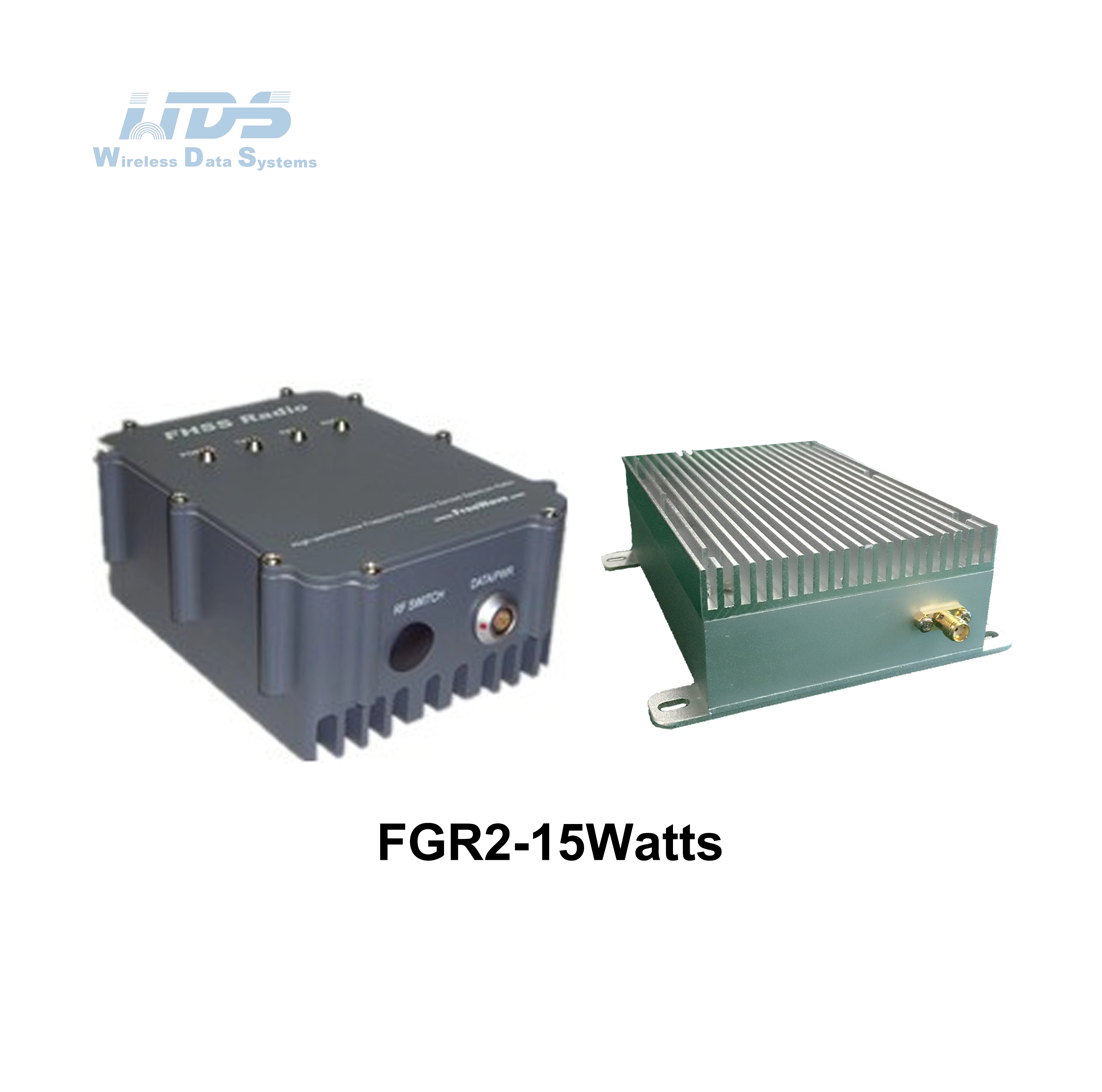
The WDS MM2 supports master, slave, repeater, and slave/repeater operation, with throughput from 115.2 to 153.6 kbps. It also includes CRC error detection, retransmission, optional 128-bit AES encryption, and TDMA availability. These capabilities suit compact telemetry links where predictable controller communication matters more than broadband capacity.
Ethernet-ready controllers become addressable network devices
With native Ethernet, a PLC or RTU becomes an IP endpoint. Configuration moves from baud rate and parity to addresses, subnet masks, gateways, transport ports, and connection limits. SCADA, HMIs, historians, and engineering workstations may reach it without cable changes. That reach is a key serial data radio vs Ethernet radio difference.
Access must still match the controller’s resources. Session limits and background traffic can affect bandwidth or processing, so required clients, services, and update rates should be documented before commissioning. A connection budget prevents maintenance tools from unexpectedly competing with control traffic.
Mixed installations need tunneling or protocol conversion
Brownfield systems often contain both interface types. Serial tunneling recreates the original byte stream at the far end, minimizing field changes. Protocol conversion translates a serial protocol into its Ethernet-based form for native IP integration. This choice separates preservation from conversion.
Existing serial devices can communicate across a Modbus TCP/IP network when a gateway converts the physical layer and message wrapper. Unit-address mapping, timeout translation, and the serialization of multiple IP sessions onto one RS-485 bus must still be defined. Compatible devices alone do not guarantee a successful migration.
Performance Is More Than the Advertised Radio Speed
Polling time depends on the whole message path
RF data rate, usable throughput, end-to-end latency, and latency variation measure different things. A fast modulation rate does not guarantee a fast PLC response if retries, congestion, scheduling, or long polling intervals delay the application message. Serial telemetry can remain efficient on modest bandwidth because frames are compact and the master controls when each remote speaks. Ethernet adds headers and management traffic, yet it can carry a larger aggregate load and several applications at once.
The practical serial data radio vs Ethernet radio test is whether the full path meets the required update time under realistic conditions. TCP uses connection management and retransmission for reliable delivery, while UDP reduces transport overhead but leaves more responsibility to the application. Neither removes RF errors, queueing, or radio scheduling.
Size the link from actual traffic, not port specifications
Capacity planning starts with application behavior. Count active RTUs, PLCs, HMIs, and servers; record request and response sizes; multiply by polling frequency; then add protocol overhead, retry margin, and maintenance traffic. Dozens of slowly polled RTUs may use little bandwidth, while one PLC being programmed as an HMI and historian exchange data can create a much heavier burst. Serial data radio vs Ethernet radio sizing must therefore follow actual traffic rather than interface names.
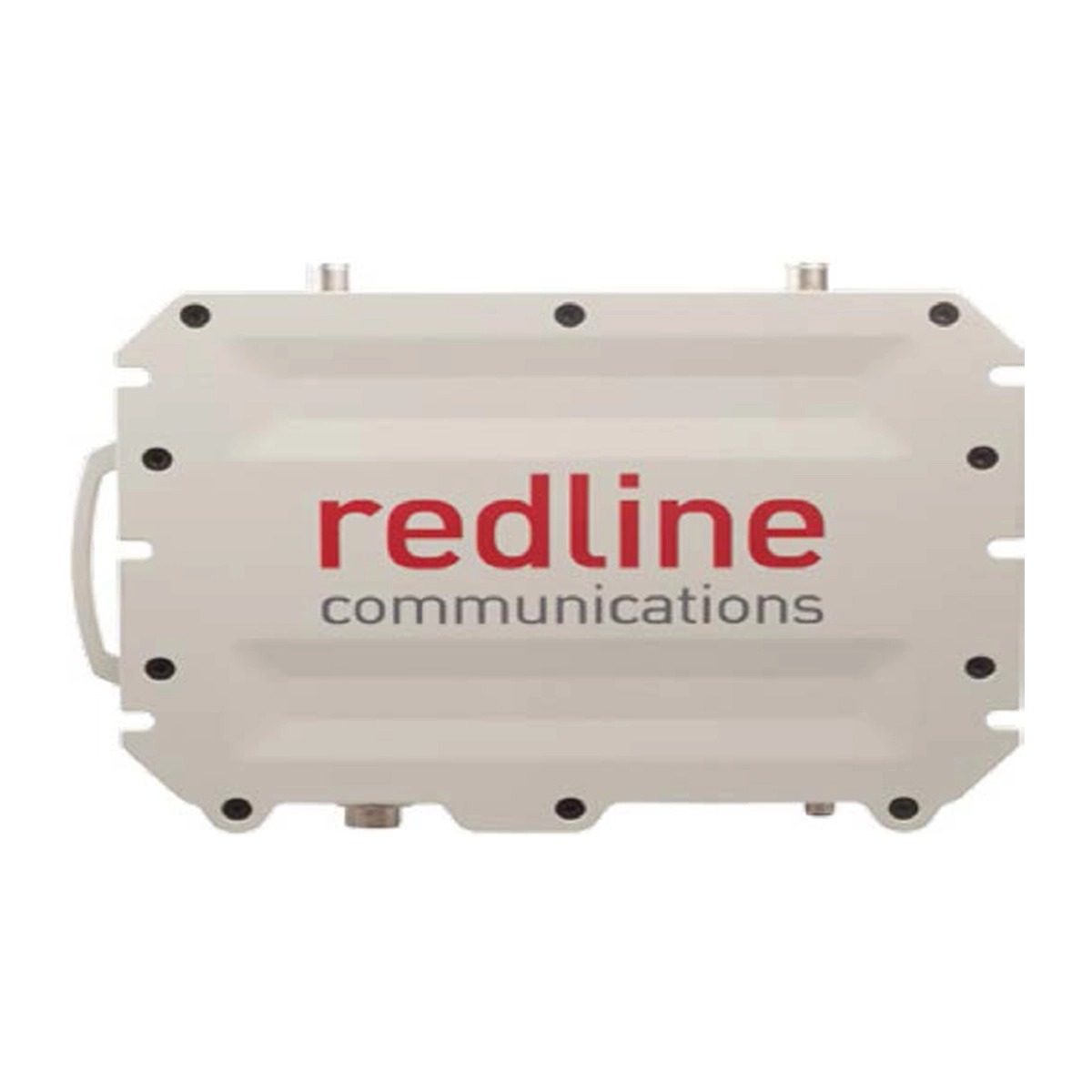
The WDS Outdoor Wireless Broadband Transmission Radio provides throughput up to 186.6 Mbps, latency below 10 ms, connectivity for as many as 120 remotes, VLAN functions, and traffic-level QoS. Ordinary RTU polling may not need broadband capacity, but this performance range becomes useful when telemetry shares the link with engineering data, voice, video, or other IP services.
Advertised speed should be treated as an upper boundary, not an application guarantee. The selection process needs headroom for weak remotes, retransmissions, peak maintenance activity, and future growth. Field testing should verify that margin under load.
Ethernet Shifts More Work into Network Management
Addressing and segmentation become design tasks
An Ethernet radio project needs an IP plan before commissioning. Controllers, radios, management interfaces, and gateways require unique addresses; subnets and gateways must match the intended path. VLANs can separate control from maintenance traffic, while unnecessary discovery traffic should be limited. This added planning is a defining serial data radio vs Ethernet radio difference.
A healthy RF link does not prove the application path is correct. Duplicate addresses, incorrect subnet masks, blocked ports, routing errors, or VLAN mismatches can still stop communication. Address records and network diagrams help separate these faults from radio problems.
Troubleshooting crosses several technical layers
A structured test sequence keeps the radio from becoming the default suspect. Check the controller port and cable, verify addressing and transport settings, and then inspect the local radio. Review signal quality, link state, and retries before testing the remote path and application response. This is why serial data radio vs Ethernet radio troubleshooting needs a layered workflow.
Ownership should be equally clear. Controls personnel manage PLC or RTU behavior and polling, radio specialists manage RF performance, and OT network teams manage addressing, segmentation, routing, and access. Ethernet is not inherently less reliable, but it creates more layers. Clear boundaries make the system easier to support.
Remote access must be designed, not merely enabled
Ethernet simplifies remote engineering but expands possible paths to operational devices. Restrict access to required endpoints and ports, separate OT from business traffic, and use encrypted management with strong authentication. Disable unused services, retain configuration logs, and never expose PLCs or RTUs directly to the public internet.
OT security planning must account for performance, reliability, and safety as well as confidentiality. Internet exposure should be minimized, IT and OT environments should be segmented, remote access should be tightly controlled, and permitted data flows should be documented. These safeguards become essential when routable access is introduced.
The WDS broadband radio includes VLAN controls, HTTPS and SSH management, SNMP, RADIUS authentication, and over-the-air encryption. These functions are effective only when they are configured and documented correctly. Interference, obstructions, antenna alignment, and spectrum rules still affect the RF layer.
Choosing and Migrating Without Overbuilding
Match the radio architecture to the actual job
A serial data radio fits serial-only controllers, compact messages, predictable polling, and systems that already meet update-time requirements. It also avoids unnecessary risk when remote IP access or concurrent applications add little value. Ethernet becomes stronger when several IP devices share the link or SCADA, HMI, historian, diagnostics, and remote programming must coexist. Serial data radio vs Ethernet radio should follow the required communication model, not a preference for newer technology.
Use three questions to keep the choice grounded:
●Is the goal to recreate one established controller link? A serial data radio usually provides the simpler path.
●Must several addressable devices or services share the infrastructure? Ethernet offers the more scalable architecture.
●Does the site need IP growth while retaining serial assets? A hybrid design avoids replacing working equipment without a clear return.
Bandwidth alone should not decide serial data radio vs Ethernet radio. Compatibility, update time, client count, maintenance ownership, security, and growth matter more. This keeps the design tied to operational needs.
A staged migration is often safer than a full replacement
A brownfield upgrade should inventory interfaces, addresses, baud rates, poll intervals, timeouts, register maps, and failure behavior. The record defines what must remain stable as the radio infrastructure changes. Proceed in controlled stages:
1. Build and validate the Ethernet radio backbone without immediately changing the field protocol.
2. Connect serial-only RTUs and PLCs through transparent tunnels or configured gateways.
3. Move suitable controllers to native Ethernet one site at a time.
4. Test alarms, mapping, timestamps, retries, remote access, and recovery after interruption.
5. Retire the original path only after the replacement performs correctly under degraded conditions.
This method prevents migration from becoming a simultaneous controller, protocol, radio, and network replacement. Serial can remain at the field edge while Ethernet provides backbone aggregation and access. In many mixed estates, that hybrid is a practical long-term design.
Conclusion
Choosing between serial and Ethernet radio should come down to controller interfaces, traffic patterns, timing requirements, and the network-management capacity available at the site. Serial remains practical for stable, low-volume RTU or PLC links, while Ethernet suits multiple IP endpoints, remote diagnostics, and future expansion.
Shenzhen Sinosun Technology Co., Ltd. supports both approaches with serial data radios and industrial wireless Ethernet products, helping engineers preserve legacy connections or build broader IP networks without unnecessary redesign. The right serial data radio vs Ethernet radio decision is the one that improves reliability, maintainability, and operating efficiency.
FAQ
Q: What is the main difference between a serial data radio and an Ethernet radio?
A: A serial radio extends an RS-232 or RS-485 data stream, while an Ethernet radio carries packet-based traffic between IP-addressable controllers, computers, and network devices.
Q: Which is better for RTUs: serial data radio vs Ethernet radio?
A: Serial often suits legacy RTUs with predictable polling and low data volumes. Ethernet is more appropriate when multiple devices, remote diagnostics, or broader IP integration are required.
Q: Can a serial RTU or PLC connect through an Ethernet radio?
A: Yes. A serial device server or protocol gateway can tunnel serial data across the IP link or convert protocols such as Modbus RTU to Modbus TCP.
Q: Is an Ethernet radio always faster than a serial radio?
A: Not necessarily. Ethernet generally offers greater capacity, but actual update speed depends on message size, polling frequency, RF conditions, retransmissions, network congestion, and controller response time.
Q: What changes when migrating PLC communications from serial to Ethernet?
A: Engineers must plan IP addresses, subnet masks, transport ports, connection limits, traffic segmentation, cybersecurity controls, and troubleshooting procedures in addition to validating application timing.
Q: Are Ethernet radio networks harder to secure?
A: They require more deliberate security because devices may become reachable across wider networks. Segmentation, restricted ports, encrypted management, strong authentication, and controlled remote access reduce exposure.