Unmanned Aerial Vehicles (UAVs) have rapidly become integral to various industries, from military reconnaissance to environmental monitoring and emergency response. One of the key capabilities that make UAVs so valuable is their ability to transmit high-definition (HD) video over long distances. However, traditional wireless communication systems often struggle to maintain stable, high-quality video transmission, especially as distance increases and environmental factors such as interference come into play. This is where airborne radios step in, providing specialized technology to enable seamless, long-range HD video transmission. In this article, we will discuss the challenges of long-range video transmission for UAVs, explain how airborne radios address these challenges, and explore their applications in various industries.
The Challenge of Long-Range HD Video for UAVs
UAVs are increasingly tasked with real-time HD video transmission for various purposes, such as surveillance, mapping, search and rescue, and disaster response. The need for reliable video feedback is critical, especially when UAVs are used in applications that require accurate, real-time visual data for decision-making.
However, transmitting high-quality video over long distances presents significant challenges. As the distance between the UAV and the ground station increases, the signal quality degrades, leading to pixelated or delayed video streams. Additionally, the longer the transmission range, the more susceptible the signal becomes to interference from other devices, environmental conditions, or obstructions such as buildings and trees. To maintain stable, high-definition video transmission, a communication system with high bandwidth, low latency, and robust signal reliability is essential.
Traditional wireless communication systems, such as those used for mobile networks or short-range communications, are often inadequate for UAVs that need to transmit large amounts of data over long distances. This is why specialized solutions like airborne radios are crucial for enabling uninterrupted, high-quality video transmission.
What Makes Airborne Radios Suitable for HD Video Links
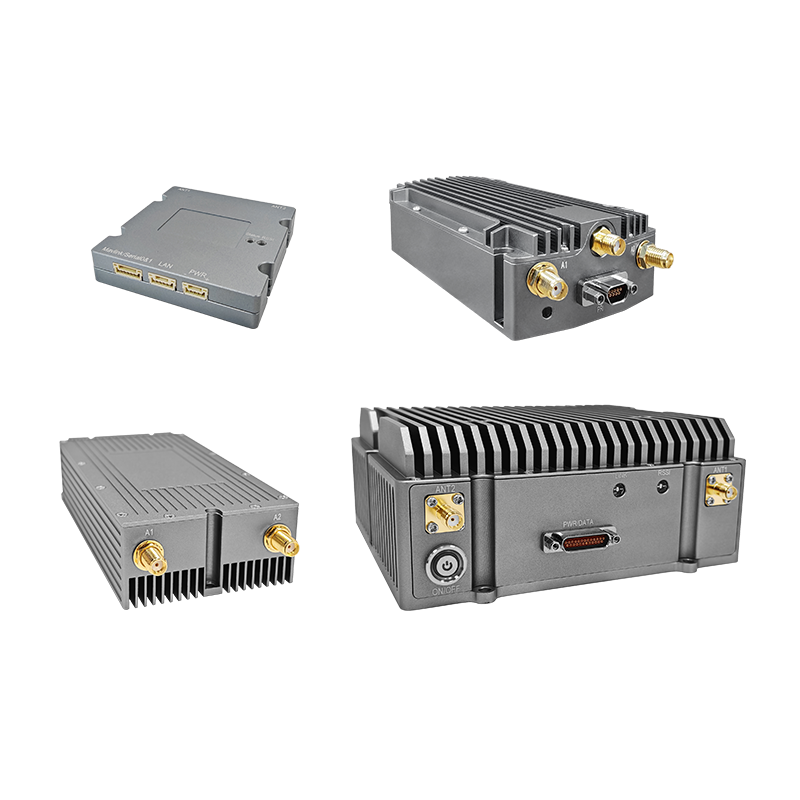
Airborne radios are designed specifically to meet the unique demands of UAV-based communications, including long-range HD video transmission. These radios offer several advantages over traditional wireless communication systems, making them the ideal choice for UAVs.
Higher Bandwidth and Data Rates
One of the primary benefits of airborne radios is their ability to support higher bandwidths and data rates. This is essential for transmitting HD video, which requires large amounts of data to be transferred in real time. Airborne radios can handle these high data rates, ensuring that the video feed remains clear and continuous, even over long distances. This capability is critical for applications where real-time decision-making depends on uninterrupted video feedback.
Multi-Antenna and Multi-Band Technology
Airborne radios typically incorporate advanced multi-antenna and multi-band technologies, which significantly improve transmission stability. Multi-antenna systems, such as those using MIMO (Multiple Input, Multiple Output) technology, allow for better signal quality and reliability by transmitting and receiving multiple signals simultaneously. This enhances the overall communication performance, particularly in environments with signal interference.
Additionally, airborne radios often operate across multiple frequency bands, allowing them to dynamically switch between frequencies to avoid interference. This flexibility ensures a more reliable connection, even in areas with high radio traffic or environmental obstacles that could otherwise disrupt the signal.
Optimized Video Encoding and Link Control
To further improve video transmission, airborne radios are equipped with optimized video encoding and link control algorithms. These technologies help maintain video quality while reducing bandwidth consumption. By compressing the video signal without compromising its quality, airborne radios enable long-range HD video transmission without overloading the available communication bandwidth.
Link control mechanisms also play a key role in stabilizing the video feed. These systems monitor the signal quality and adjust transmission parameters in real time to maintain a strong, consistent connection, even when the UAV is moving through areas with fluctuating signal strength.
Techniques for Reliable Long-Distance Transmission
To achieve reliable long-distance video transmission, several techniques are employed in airborne radios, including frequency selection, bandwidth management, antenna design, and interference mitigation.
Frequency Selection and Bandwidth Management
Airborne radios are capable of dynamically selecting the optimal frequency and managing bandwidth allocation. Technologies like OFDM (Orthogonal Frequency Division Multiplexing) or COFDM (Coded Orthogonal Frequency Division Multiplexing) are often used to enhance the signal's ability to travel over long distances and through obstacles. These techniques allow the airborne radio to break down the signal into multiple smaller sub-signals, each transmitted on different frequencies, reducing the likelihood of signal interference and improving overall transmission quality.
Antenna Design and Gain Optimization
The design of the antennas used in airborne radios is another critical factor in achieving long-range communication. These radios often use high-gain antennas that focus the radio signal in specific directions, increasing its reach and reducing the risk of signal loss. The ability to optimize antenna gain ensures that the UAV can maintain a strong connection with the ground station, even when it is far from the base or operating in challenging environments.
Interference and Signal Recovery Mechanisms
In environments where there is heavy interference, such as urban areas with high radio traffic or remote locations with harsh weather conditions, maintaining a stable signal can be difficult. Airborne radios are equipped with advanced signal recovery mechanisms that help counteract interference. These systems continuously monitor the signal quality and use error-correction techniques to ensure that the video feed remains intact, even in adverse conditions.
Use Cases Across Industries
Airborne radios have a wide range of applications across different industries, enabling long-range HD video transmission for UAVs. Here are some of the key use cases where these radios provide significant value:
Remote Surveillance and Security Inspections
In security operations, UAVs equipped with airborne radios can transmit HD video back to a control center in real time, allowing security personnel to monitor large areas from a distance. Whether it’s patrolling a border, monitoring a high-security facility, or conducting surveillance in urban areas, airborne radios ensure that the video feed remains clear and reliable, no matter the distance.
Geographic Mapping and Infrastructure Inspections
For geographic mapping and infrastructure inspections, UAVs with long-range video capabilities are essential. Whether it’s mapping remote landscapes, inspecting power lines, or surveying bridges, the ability to transmit HD video over long distances allows operators to capture detailed visuals from hard-to-reach areas. Airborne radios make it possible to transmit this data reliably, ensuring that operators have a clear view of the area being inspected.
Emergency Response and Disaster Monitoring
During natural disasters or emergency response situations, UAVs equipped with airborne radios can provide real-time video feeds of affected areas. This helps responders assess the situation quickly, locate victims, and plan the best course of action. The long-range capabilities of airborne radios ensure that the UAV can stay connected even in remote or disaster-stricken areas, where traditional communication systems may be down.
Commercial Aerial Photography and Filmmaking
In the world of aerial photography and filmmaking, the quality of the video is crucial. Airborne radios enable UAVs to transmit HD video for real-time streaming, allowing filmmakers to capture stunning visuals from high altitudes or difficult-to-reach locations. Whether it’s for movies, advertisements, or live events, the reliable transmission of HD video is essential for delivering the best results.
How Product Features Translate to Operational Benefits
The features of airborne radios translate directly into operational benefits for UAVs in a variety of fields.
Increased Coverage Area
The long-range capabilities of airborne radios extend the operational reach of UAVs, allowing them to cover large areas without losing connection. This is particularly important in applications like disaster response or large-scale surveillance, where the UAVs need to cover expansive territories.
Real-Time HD Feedback for Faster Decision-Making
The ability to transmit HD video in real time allows decision-makers to receive immediate feedback from the field. This is especially critical in emergency situations, where quick decisions can make a difference in saving lives. Airborne radios enable UAVs to deliver live, high-quality video that helps operators make informed choices quickly.
Integration with UAV Control Systems
Airborne radios are designed to integrate seamlessly with UAV control systems, ensuring that video transmission is stable and synchronized with the UAV's flight controls. This integration improves the overall stability and reliability of the UAV’s operation, making it easier for operators to manage the UAV’s flight path while receiving high-quality video feedback.
Conclusion
Airborne radios are crucial for enabling long-range HD video transmission in UAVs, overcoming the limitations of traditional communication systems. By providing high bandwidth, low latency, and robust signal recovery, airborne radios ensure that UAVs can deliver clear, uninterrupted video even in challenging environments. Whether for surveillance, mapping, emergency response, or commercial filmmaking, airborne radios are transforming the capabilities of UAVs, making them an indispensable tool for a wide range of industries.
Contact Us
For more information on how airborne radios can enhance your UAV operations, contact us at Shenzhen Sinosun Technology Co., Ltd. We are ready to provide tailored airborne radios solutions to meet your needs.
FAQs
1. Why are airborne radios important for UAVs?
Airborne radios enable UAVs to transmit high-definition video over long distances, ensuring reliable communication even in challenging environments.
2. How do airborne radios improve video quality for UAVs?
Airborne radios provide higher bandwidth, optimized encoding, and robust link control to ensure stable, high-quality video transmission.
3. Can airborne radios work in remote or disaster-stricken areas?
Yes, airborne radios are designed to function in areas without traditional communication infrastructure, providing reliable connectivity for UAVs in remote locations.
4. How do airborne radios support multi-antenna and multi-band technology?
Airborne radios use advanced multi-antenna and multi-band technologies to improve signal stability and ensure a reliable connection even in areas with interference.


