When a mobile mesh link looks strong on a bench but loses video, latency, or route stability in motion, the problem is often not transmit power alone. Antenna architecture changes how a radio uses reflected paths, handles fading, and shares capacity across multiple hops. MIMO can use multiple spatial paths to raise throughput or improve reliability, while SISO offers a simpler single-path design. This comparison explains how each approach affects usable range, sustained data rate, and network resilience, helping you choose a MANET Mesh Radio for real operating conditions rather than headline specifications.
Throughput: Where MIMO Creates a Real Capacity Advantage
More Spatial Streams Do Not Always Mean Proportionally More Payload
Spatial multiplexing allows a MIMO MANET Mesh Radio to send independent streams in the same time-frequency resource when the receiver can separate distinct spatial paths. A SISO MANET Mesh Radio carries only one stream and cannot obtain the same multiplexing gain. Under weaker conditions, however, multiple antennas may be used for diversity instead of parallel data, trading peak rate for more robust decoding.
That gain is not the same as application throughput. A headline PHY rate excludes routing updates, encryption and protocol overhead, retransmissions, and airtime shared by voice, video, telemetry, and command data. Higher modulation needs adequate signal-to-noise ratio, while correlated antenna paths can limit usable streams. “Twice the antennas” therefore does not reliably mean “twice the payload.”
Channel behavior also shifts during movement. A radio that briefly supports two streams may fall back to one stream, stronger coding, or a diversity mode when SNR drops or paths become correlated. Procurement tests should capture those transitions because frequent rate changes can affect video continuity and latency even when the average throughput appears acceptable.
Multi-Hop Relaying Changes the Throughput Calculation
A direct-link test says little about capacity several hops into a mesh. Each relay receives and forwards the packet, consuming shared airtime and competing with nearby nodes. Collisions, backoff, and retransmissions also change goodput; multi-hop performance depends on traffic load and topology rather than a fixed penalty per hop.
Higher link capacity gives a MIMO MANET Mesh Radio more room to absorb that cost, particularly near gateways where routes converge. One weak hop can still bottleneck every source behind it. The useful question is: what sustained payload reaches the destination at the deepest operational hop?
Measure the Traffic the Mission Will Actually Carry
Testing should reproduce the mission traffic mix. Run simultaneous uplink and downlink flows, keep video active with telemetry and control packets, and repeat at one, three, and five hops. Add movement and partial obstruction to reveal whether a high-rate mode is stable or only briefly available. Judge the lowest acceptable sustained result, not the highest ideal burst.
Compare both architectures with the intended antennas, power settings, channel plan, routing behavior, and application load active together.
Range: Focus on Usable Coverage, Not the Farthest Detected Signal
MIMO Can Preserve Performance Near the Coverage Edge
Maximum detection distance is not usable range. A link may exchange management packets while failing the required video rate, latency target, or packet-delivery ratio. For a MANET Mesh Radio, coverage ends when the application requirement is no longer met. An unstable distant neighbor can be less useful than a shorter, dependable relay.
MIMO can improve edge performance by combining signal energy received through different antennas or by sending coded copies that experience different fading conditions. Spatial diversity and space-time techniques reduce the chance that every branch falls into a deep fade at the same moment, while beamforming can concentrate energy toward a useful path. Diversity, multiplexing, and array gain are separate benefits that depend on channel conditions and implementation.
The value changes with the environment. In clear line of sight and strong SNR, a MANET Mesh Radio may favor additional spatial streams and higher modulation. Around buildings, terrain, vehicles, trees, or interior structures, reflected paths can provide useful diversity instead of acting only as interference. A MIMO MANET Mesh Radio may therefore maintain the required payload farther into a difficult route, but it does not automatically multiply physical distance.
The Link Budget Still Sets the Boundary
Frequency, power, sensitivity, bandwidth, antenna gain, cable loss, mounting height, polarization, and Fresnel clearance define the link budget. Terrain blockage and platform shadowing can overwhelm a nominal MIMO advantage, particularly when both antennas are obstructed by the same airframe, vehicle body, or operator. Wider channels may increase peak capacity but demand more signal quality across a broader slice of spectrum. Narrower channels can support a more robust link at a lower rate when coverage matters more than peak throughput.
Compact aircraft, robots, and handheld units also limit antenna separation and orientation. Closely spaced or poorly isolated antennas may produce more correlated channels, reducing the spatial independence needed for multiplexing. Cable routing, pattern distortion, and nearby electronics further affect field performance. Range estimates should state the frequency, bandwidth, antenna system, platform height, traffic requirement, and propagation condition rather than presenting one kilometer figure as a universal property of a MANET Mesh Radio.
Reliability: The Advantage Extends Beyond the RF Link
Diversity Helps Reduce Fades, Errors, and Retransmissions
Reliability begins with the receiver’s ability to recover data when one path weakens. Multiple antennas provide additional observations of the signal, and combining can improve effective SNR when those observations are sufficiently independent. Better decoding reduces corrupted packets; fewer errors reduce retransmissions; lower retransmission activity leaves more airtime available and makes latency more consistent. Space-time coding and receiver combining can obtain diversity without simply adding transmit power.
The terms should not be blended together. Spatial multiplexing primarily seeks more capacity, receive diversity combines multiple versions of a stream, space-time coding adds structured redundancy, and beamforming adjusts phase or amplitude to improve energy delivery or reception. A MIMO MANET Mesh Radio may support several modes, but the waveform decides when and how each one is used. That implementation detail matters more than the presence of two antenna connectors.
Stable Neighbors Help the Mesh Maintain Better Routes
A MANET is built from individual radio links, but users experience the route. When a marginal neighbor repeatedly appears and disappears, routing may recalculate paths, interrupt traffic, increase jitter, or push packets onto a longer and more congested alternative. The problem persists because distance, orientation, obstruction, and interference change during operation. Dynamic topology and multi-hop routing are central reliability challenges in mobile ad hoc networks.
More stable RF links can reduce unnecessary route churn. Diversity may help a MANET Mesh Radio retain a usable neighbor while a vehicle turns, an aircraft banks, or a person blocks one antenna orientation. Maintaining several viable neighbors also gives the routing layer alternatives when a path genuinely fails. Even so, MIMO cannot repair weak routing metrics, poor update timing, sparse node placement, or an overloaded gateway; link and network reliability must be evaluated together.
Test Reliability While the Network Is Moving
A stationary RSSI reading is not a reliability test. Build a route that includes clear line of sight, partial obstruction, representative non-line-of-sight segments, platform turns, and expected interference. Repeat it at the intended hop depth while the MANET Mesh Radio network carries its normal traffic load. For airborne or fast-moving platforms, include orientation changes and realistic Doppler conditions rather than relying only on a bench connection.
Record packet-delivery ratio, latency distribution, jitter, retransmissions, link outages, route changes, and recovery time after obstruction. RSSI and SNR are useful diagnostics, but neither proves that a MANET Mesh Radio can maintain video or control traffic. Correlating RF measurements with application behavior helps identify whether a failure came from insufficient link margin, congestion, routing instability, or antenna placement. The strongest design remains predictable through the difficult portion of the route, not merely on average.
Choosing the Right Architecture for the Deployment
SISO Still Fits Deliberately Simple Requirements
SISO is not automatically obsolete. A low-rate telemetry link between mostly stationary nodes may gain little from additional RF chains, especially when distance is short and propagation is predictable. The same applies where antenna space, weight, energy use, or cost is tightly constrained. For these missions, a simpler MANET Mesh Radio can be easier to install and validate.
The trade-off is reduced headroom. Only one spatial stream is available, and the receiver has fewer options for combining independently faded observations. A change in polarization, deep fade, or new obstruction can therefore have a larger effect on the sole RF path. SISO is most defensible when data-rate requirements are modest, traffic is not concentrated through many relays, and field testing confirms adequate margin throughout the operating area.
MIMO Is the Safer Default for Demanding MANET Operations
A MIMO MANET Mesh Radio is the stronger default when mobile nodes carry HD video alongside voice, telemetry, mapping, or command data. Reflective terrain, partial obstruction, changing orientation, several relay hops, and traffic aggregation all increase the value of extra spatial capacity or diversity. Strict availability and latency targets also favor a MANET Mesh Radio that can adapt between higher-rate and more robust transmission behavior. The decision still has to cover the complete radio-antenna-platform system rather than treating “MIMO” as a full specification.
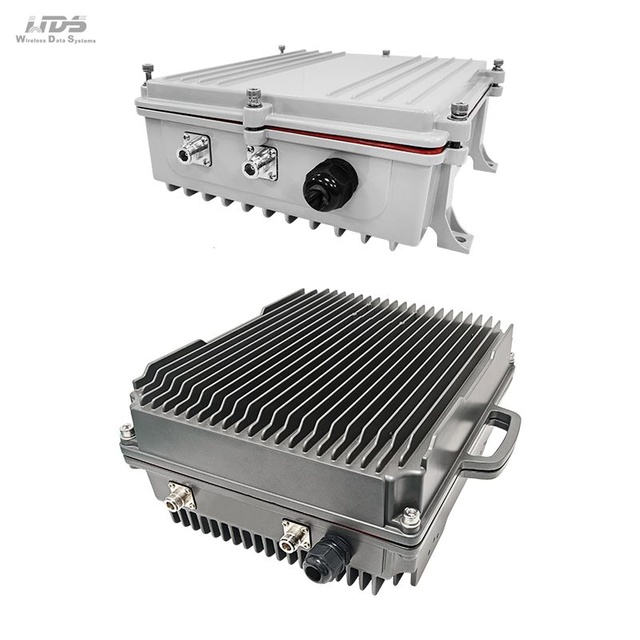
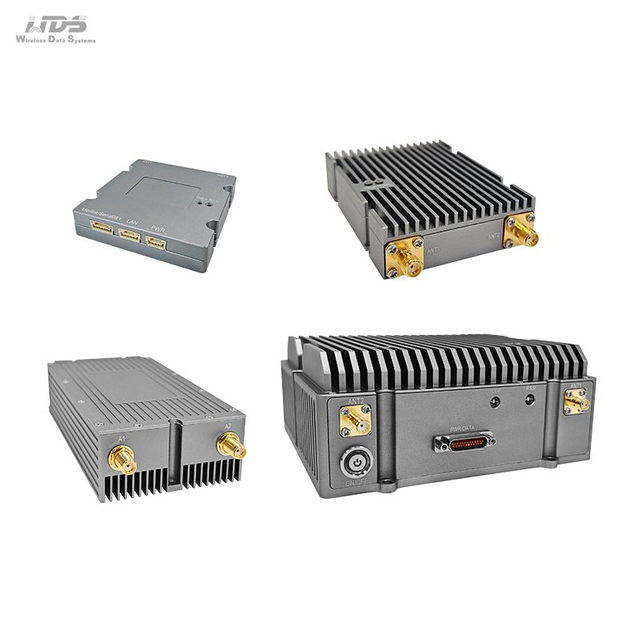
The WDS MIMOmesh Lightweight Airborne Series provides a practical example of the capabilities buyers should evaluate. It combines space-time coding, receive diversity, transmit and receive beamforming, spatial multiplexing, configurable channel widths, adaptive modulation and data rates, QoS, dynamic routing, and multi-hop relay operation. Available configurations vary in processing capability, RF output, size, weight, power consumption, frequency range, and interfaces, so the final choice depends on the mission. Performance should be validated with the intended antennas, hop depth, mobility pattern, and traffic conditions.
Conclusion
Choosing between MIMO and SISO comes down to the traffic, mobility, coverage, and reliability a network must sustain in the field. MIMO usually offers more capacity and resilience for video-heavy, multi-hop, or obstructed deployments, while SISO remains practical for simpler, lower-rate links.
Shenzhen Sinosun Technology Co., Ltd. develops MANET Mesh Radio solutions, including MIMOmesh products designed for self-organizing data, video, and mobile networking applications. Matching the radio, antenna layout, bandwidth, and power requirements to the operating environment helps teams build more stable links without adding unnecessary system complexity.
FAQ
Q: What is a MANET Mesh Radio?
A: A MANET Mesh Radio forms a self-organizing, multi-hop network in which mobile nodes can relay data and adapt routes without fixed communication infrastructure.
Q: Is MIMO always faster than SISO?
A: MIMO can carry multiple spatial streams, but actual throughput depends on signal quality, channel width, antenna configuration, interference, protocol overhead, and whether the environment supports stream separation.
Q: Does MIMO increase the range of a mesh radio?
A: MIMO can improve usable range through diversity and signal combining, although frequency, transmit power, receiver sensitivity, antenna placement, terrain, and required data rate still determine coverage.
Q: Why does throughput decrease across multiple mesh hops?
A: Each relay must receive and retransmit packets, consuming shared airtime. Interference, contention, routing traffic, and retransmissions further reduce the payload capacity available at deeper hops.
Q: When is SISO a practical choice for a MANET?
A: SISO can suit low-rate telemetry, short predictable links, stationary nodes, or platforms with strict antenna, power, weight, cost, and processing constraints.
Q: Does a MIMO radio require multiple antennas at both ends?
A: Full MIMO benefits generally require compatible transmit and receive chains at both endpoints. Mixing SISO and MIMO equipment may limit spatial streams, diversity gains, or link performance.